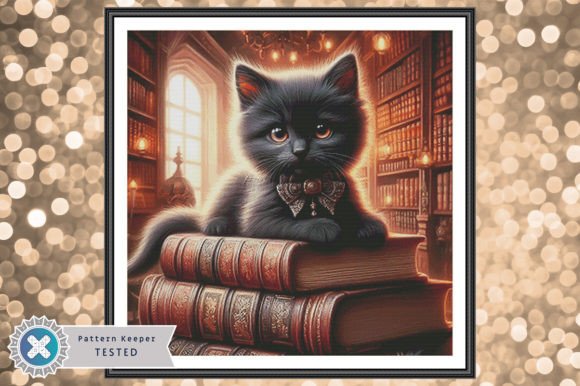
Librarian Kitten Cross Stitch Pattern
A Designer’s First Look: Whimsy Meets Precision
As an embroidery designer who’s developed over 200+ boutique apparel collections, my first impression of the Librarian Kitten Cross Stitch Pattern is immediate and vivid: it’s a quiet celebration of literary charm and feline mischief—delivered with the disciplined elegance only full-coverage cross stitch can achieve. At 350w × 350h stitches, this isn’t a dainty accent—it’s a statement piece built for presence. The 75 DMC thread count signals thoughtful color layering, not just contrast for visibility, but depth for storytelling. On neutral sweatshirts—think oatmeal French terry or heather grey loopback—the design reads as warm, approachable, and intentionally handmade. On charcoal or navy fabric, it gains subtle sophistication; on blush or mint pastels, it leans into gentle, nostalgic femininity without tipping into cutesy overload.
How It Lives on Real Sweatshirt Styles
This pattern thrives across the boutique apparel spectrum—not just as a chest emblem, but as a curated detail. On oversized hoodies, centered at the upper chest (just below the neckline), the 25″ × 25″ finished size at 14-count linen translates beautifully to a bold, balanced focal point—neither lost in volume nor overwhelming the silhouette. For sleeve accents? A scaled-down version works, but the full pattern shines strongest on back placements—especially on relaxed-fit crewnecks or cropped sweatshirts where the full 350×350 stitch field becomes a wearable canvas. In seasonal collections—think autumnal knits or spring-weight cotton blends—the Librarian Kitten Cross Stitch Pattern delivers warmth and narrative without visual clutter. Its rhythm feels both playful and grounded, making it ideal for brands that balance rustic authenticity with modern lifestyle appeal.
Stitch Density & Fabric Reality Check
Let’s talk practicality: full-coverage cross stitch at this scale means high stitch density—ideal for durability but demanding on fabric choice and stabilization. For sweatshirt embroidery, I recommend medium-weight cutaway stabilizer layered beneath midweight fleece or brushed cotton. Avoid lightweight knit blends unless pre-shrunk and stabilized aggressively—the tension from dense stitching can cause puckering or distortion. On thicker fabrics like heavyweight French terry, the Librarian Kitten Cross Stitch Pattern holds its shape cleanly; on thinner, smoother cottons, test stitch density first. Crucially, the 75 DMC thread palette suggests intentional tonal variation—not just bright pops—so contrast remains legible even on dark garments. That’s non-negotiable for commercial embroidery: if your customer can’t read “librarian” or spot the kitten’s tiny spectacles at arm’s length, the story dissolves.
Placement, Readability, and Hoop Logistics
Hoop size matters here. With a 25″ finished width, you’ll need at minimum a 10″ × 10″ hoop—or better yet, a multi-position frame for consistent tension across the full field. For small shop production, consider splitting the design into quadrants if your machine has limited embroidery area, but be mindful of seam alignment and color transitions. On chest placements, centering is key: offset even ¼ inch skews the kitten’s gaze and weakens the librarian motif’s gentle authority. And yes—this pattern *demands* attention to small details: the tilt of the glasses, the curl of the tail, the texture of stacked books. Those micro-expressions are what transform a generic cat motif into a signature brand asset.
Brand Impact: Beyond the Stitch
For Etsy sellers and small clothing brands, the Librarian Kitten Cross Stitch Pattern isn’t just decoration—it’s brand shorthand. It telegraphs values: curiosity, quiet confidence, tactile craftsmanship, and a love of slow-making. When styled in product photography—folded sleeves, soft natural light, a vintage library card tucked beside the garment—it elevates perceived value instantly. Customers don’t just buy a sweatshirt; they invest in a mood, a memory, a shared inside joke among book lovers and crafters alike. That emotional resonance builds trust faster than any discount code. As a digital embroidery file, it also scales well across formats: use the same core graphic for printable mockups, social banners, and even packaging stickers—making it a versatile design asset for cohesive branding.
Durability, Care, and Customer Expectations
Washing durability hinges on two things: proper thread lock-off (especially at motif boundaries) and post-stitch heat-setting. Recommend customers turn garments inside-out before washing—and avoid high-heat dryers. Because this is a full-coverage design, loose threads or skipped stitches are more visible than in minimalist motifs, so quality control during production is essential. For handmade product listings, transparency about care instructions builds credibility. Mention that the Librarian Kitten Cross Stitch Pattern was designed for experienced stitchers—not because it’s difficult, but because it rewards patience and precision. That honesty attracts your ideal buyer: the discerning crafter, the boutique curator, the Etsy seller who values substance over speed.
Final Verdict for Creative Entrepreneurs
The Librarian Kitten Cross Stitch Pattern stands apart in the Cross Stitch Patterns category—not as a novelty, but as a considered, commercially viable Graphics asset. It bridges playful subject matter with structural integrity, offering small shop owners a rare combination: strong visual identity, clear audience alignment (bookish, cozy, clever), and scalable versatility across sweatshirt embroidery, hoodie design, and custom apparel lines. It feels premium without being pretentious, decorative without sacrificing wearability, and handmade without looking amateurish. If your brand celebrates intentionality—whether through sustainable fabric choices, local production, or storytelling-driven design—this pattern doesn’t just complement your voice. It amplifies it.
Pro tip: Before committing to bulk production, verify the exact file format, licensing terms for commercial embroidery, and whether the pattern includes color-separation guides or PDF charts. While the description confirms size (350×350 stitches), thread count (75 DMC), and expected finished dimensions, always cross-check hoop compatibility and recommended fabric weight with your digitizer or embroidery partner. This ensures your small shop product stays true to the vision—and your customers receive the polished finished product they expect.