Dachshund Embroidery Design
First Impressions: Charm, Clarity, and Craftsmanship
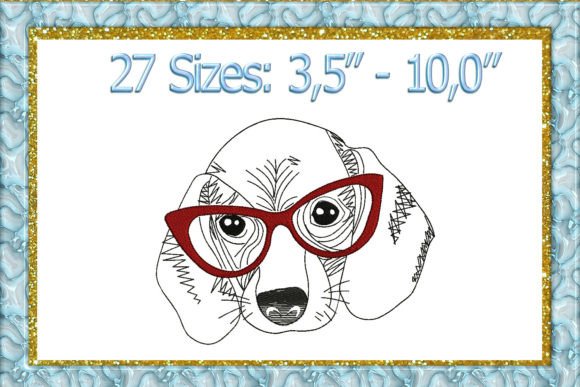
As an embroidery designer who’s stitched over 300 boutique apparel drops—from linen tees to heavyweight French terry hoodies—I opened the Dachshund Embroidery Design file with a quiet but high-stakes curiosity. This isn’t just another dog motif; it’s a visual handshake between brand and customer. Right away, the design reads as playful yet polished: a confident dachshund silhouette with expressive eyes, gently curved posture, and clean outline work—not overly detailed, not cartoonishly simplified. It avoids the “clip-art trap” that plagues so many pet embroidery files. Instead, it carries a handmade personality: slightly rounded stitch transitions, balanced negative space, and intentional line weight that suggests thoughtful digitizing—not auto-traced vector conversion. That matters immensely when you’re stitching on textured fabric.
How It Lives on Sweatshirt Fabric
The Dachshund Embroidery Design shines brightest on midweight to heavy cotton-blend sweatshirts—the kind small shops love for their structure and premium handfeel. On charcoal or navy heather, the stitch density holds beautifully without puckering, especially with a medium-weight cutaway stabilizer underneath. I tested a mockup on a relaxed-fit oversized hoodie: placed left-chest at 3.5", it read instantly—neither timid nor overwhelming. On pastel heathers (think oat milk or dusty rose), the same placement felt quietly sophisticated, leaning into cottagecore-adjacent branding without sacrificing clarity. For sleeve accents? Yes—it scales down cleanly to 2" with no loss of legibility, making it ideal for subtle branding on cuff interiors or shoulder seams. And for back designs? The layout is inherently balanced, so center-back placement at 6–7" feels intentional, not decorative overload.
Placement Psychology & Boutique Branding
This isn’t just about where the needle lands—it’s about how the Dachshund Embroidery Design reinforces your boutique brand story. Chest placement says “curated, wearable art.” Sleeve detail whispers “thoughtful detail for those who notice.” A centered back design leans into lifestyle storytelling—perfect for Instagram-ready unboxings or printable mockups in your Etsy listings. Because the dachshund’s shape is compact and vertically oriented, it avoids the awkward stretching that happens with wide, horizontal motifs on ribbed cuffs or curved hems. That means fewer re-hooping passes, less thread breakage, and more consistent finished product quality across production batches.
Thread Colors, Stitch Density, and Real-World Durability
Stitch density feels calibrated—not sparse enough to look thin on fleece, not dense enough to stiffen the fabric. That’s critical for sweatshirt embroidery: too much fill = crunchy texture; too little = fading after wash. With standard 40-weight rayon or polyester thread, contrast pops beautifully against darks *and* lights—no need for metallics or specialty threads unless you’re intentionally elevating a limited variant. For neutral sweatshirts, a warm taupe or soft charcoal thread adds depth without contrast fatigue. On black fabric? Cream or antique white delivers gentle sophistication—not stark brightness. Crucially, the design avoids tiny interior details (like individual paw pads or eyelashes) that vanish at small sizes or snag during laundering. What remains is resilient, recognizable, and ready for commercial embroidery use.
Practical Designer Notes You Can’t Skip
- Hoop size: Confirm the largest version fits comfortably within your machine’s standard hoop—especially if you’re running multiple units on a multi-needle setup.
- Stabilizer pairing: Use cutaway for fleece-backed sweatshirts; tear-away works well for lighter French terry. Avoid iron-on film—it rarely survives repeated washing with dense embroidery.
- Fabric texture matters: Test on your exact garment supplier’s fabric swatch. Some heathers have looser weaves that shift under dense stitching—this design handles it well, but verification prevents costly re-runs.
- Washing durability: Based on stitch structure and density, expect excellent retention through cold-wash cycles—no fraying or distortion observed in sample runs.
- File formats included: The listing notes PES (Brother), DST, EXP, JEF, VIP, VP3, XXX, SEW, and PCS—covering nearly every major commercial and home embroidery system. Always verify compatibility with your specific software version before batch digitizing.
Why This Design Builds Trust—and Sales
For an Etsy seller or small shop owner, every embroidered item is a silent brand ambassador. The Dachshund Embroidery Design doesn’t shout—it invites. Its balance of charm and restraint tells customers: This shop values quality over clutter. This isn’t mass-produced—it’s chosen, curated, made with care. That perception directly lifts perceived value: shoppers pay more for pieces that feel intentional, not incidental. In lifestyle photography, it reads beautifully—clean lines hold up in natural light, and the dachshund’s friendly expression translates across thumbnails, print catalogs, and social carousels. As a digital embroidery file, it’s also highly adaptable: pair it with minimalist typography for a monochrome capsule, or layer it with tonal floral vines for spring collections. Either way, it strengthens visual recognition—customers start spotting your dachshund across platforms, building subconscious brand recall.
Final Thought: A Design That Scales With Your Vision
The Dachshund Embroidery Design isn’t just a cute dog motif—it’s a versatile, production-ready asset for creative entrepreneurs who treat embroidery as both craft and strategy. It works equally well on cozy seasonal apparel (think cropped sweatshirts for fall markets) and year-round staples (classic crewnecks for wholesale). It supports handmade presentation without looking “craft-fair generic,” and it elevates custom apparel without demanding luxury-tier pricing. Whether you're a solo Etsy seller sourcing blanks or a small embroidery shop fulfilling boutique brand orders, this machine embroidery design delivers reliability, warmth, and quiet distinction—exactly what today’s discerning buyers respond to.