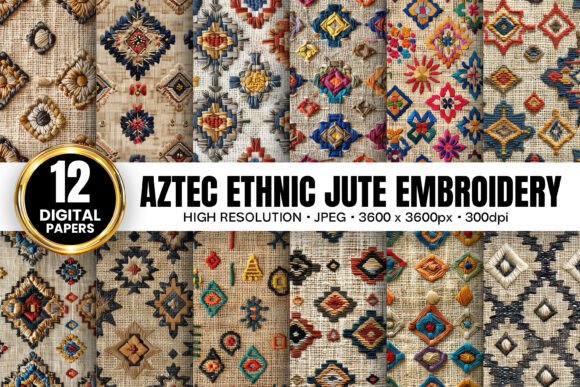
Aztec Ethnic Jute Embroidery Patterns
As an embroidery designer with years of experience, I’m always on the lookout for unique and versatile design assets that can elevate my handmade products and commercial projects. The Aztec Ethnic Jute Embroidery Patterns from Creative Fabrica caught my attention not just for their aesthetic appeal, but for their potential in a wide range of real-world applications. After testing them in several practical scenarios, I’ve come to appreciate both their strengths and limitations.
First Impressions: Visual Mood and Detail Level
The Aztec Ethnic Jute Embroidery Patterns offer a rich, cultural vibe that feels authentic and timeless. The designs are deeply rooted in traditional Aztec motifs, featuring intricate geometric patterns, stylized symbols, and bold lines that evoke a sense of heritage and craftsmanship. Each pattern has a distinct personality—some lean toward minimalist elegance, while others are densely detailed, making them ideal for different types of embroidery projects.
The visual mood is warm and earthy, with a natural texture that suggests jute or woven fabric. This makes the designs particularly well-suited for rustic, bohemian, or nature-inspired themes. Whether you're creating a personalized gift or a commercial product, these patterns have the ability to add depth and character without overwhelming the design.
Practical Use in Real Embroidery Projects
One of the first things I tested was how the Aztec Ethnic Jute Embroidery Patterns would translate onto different materials. I used them on tote bags, sweatshirts, and aprons, and found that they worked best on medium-weight fabrics like cotton canvas, linen, and denim. The designs are detailed enough to stand out, but not so dense that they become difficult to stitch on smaller hoop sizes.
For custom apparel, these patterns lend themselves well to sweatshirt embroidery and tote bag design. The high-resolution JPG files at 300 DPI ensure clarity, even when scaled up for larger projects. However, if you’re planning to use them on curved surfaces like caps or patches, you may need to adjust the design slightly to accommodate the shape and stitching constraints.
Considerations for Different Fabric Types
When working with stretchy or delicate fabrics, such as knits or thin cotton, it’s important to use the right stabilizer to prevent puckering or distortion. The Aztec Ethnic Jute Embroidery Patterns include areas of dense stitch work, which can be challenging on lightweight materials. I recommend testing the design on scrap fabric before committing to a finished product.
For dark fabrics, the contrast between the embroidery thread and the background is crucial. If you’re using light-colored threads on a dark base, make sure the design is clear and visible. On lighter fabrics, the same applies—choose thread colors that complement the design without blending into the background.
Stitch Density and Hoop Size
Some of the Aztec Ethnic Jute Embroidery Patterns feature high stitch density, especially in the more intricate sections. While this adds visual interest, it can also lead to stiffness in the fabric. For projects that require frequent washing, such as kitchen towels or baby blankets, consider adjusting the stitch density or using a lighter fill stitch where possible.
Regarding hoop size, the patterns are suitable for most standard embroidery machines, but some of the larger designs may require a larger hoop or multiple hooping steps. Always check the dimensions of your machine’s hoop before starting a project to avoid unnecessary complications.
Enhancing Product Value and Brand Consistency
Using the Aztec Ethnic Jute Embroidery Patterns can significantly enhance the perceived value of your handmade product. These designs add a layer of authenticity and artistic flair that appeals to customers looking for unique, culturally inspired items. Whether you're selling on Etsy, at craft fairs, or in a boutique, the visual appeal of these patterns can help differentiate your offerings from mass-produced alternatives.
From a branding perspective, these patterns provide consistency across your product line. They can be used as a signature style for your brand, helping to create a cohesive look that resonates with your target audience. This is especially useful for small business owners and creative entrepreneurs looking to build a recognizable identity.
Embroidery Tips and Best Practices
To get the most out of the Aztec Ethnic Jute Embroidery Patterns, follow these key tips:
- Test on scrap fabric before starting a final project to ensure the design works on your chosen material.
- Check thread color contrast to ensure visibility on your fabric type.
- Review stitch density and adjust if necessary for comfort and flexibility.
- Confirm hoop size requirements for each design to avoid unnecessary re-hooping.
- Compare light and dark fabric mockups to see how the design performs in different settings.
- Use proper stabilizer for stretchy or delicate fabrics to maintain quality.
- Inspect small details after stitching to catch any missed elements or errors.
- Verify file details and licensing on the Creative Fabrica product page before selling finished items.
Final Thoughts: Is It Worth It?
The Aztec Ethnic Jute Embroidery Patterns are a solid addition to any embroidery designer’s toolkit. Their cultural authenticity, visual richness, and versatility make them suitable for a wide range of projects, from personalized gifts to commercial embroidery. While they may not be perfect for every application, they offer a compelling blend of artistry and functionality that can elevate your handmade products and digital design assets.
If you’re looking for a set of patterns that can add depth and character to your work, the Aztec Ethnic Jute Embroidery Patterns are definitely worth considering. Just be sure to test them thoroughly and understand their limitations before integrating them into your workflow.